Powered By Blogger

Sunday, February 27, 2011

What's Happening in Libya.

Why are Libyans unhappy?


Libya has been ruled for 42 years by a cunning, repressive, eccentric dictator who has frequently described his own people as "backwards." More than half of his 6.5 million subjects are under 18. Despite Libya's plentiful oil revenues, which represent most of the national budget, many children suffer from malnutrition and anemia. Corruption is rampant, dissidents are brutally suppressed, and many citizens are afraid to say Qaddafi’s name in public or in private for fear of attracting suspicion. Instead, Qaddafi is often referred to as "the leader" and his son Seif (until now heir-apparent) as "the principal." Discussing national policy with a foreigner is punishable with three years in prison. Reporters Without Borders describes press freedom in Libya as "virtually non-existent."


Oil is the economy in Libya and oil profits have bankrolled massive investments in education and infrastructure—yet Libya lags far behind other oil-rich Arab states. Unemployment stands at 30 percent. People who have jobs often work only part-time. Basic foods—including rice, sugar, flour, gasoline—are heavily subsidized by the government and sold for a fraction of their true cost. A 2006 New Yorker article described Libya's "prosperity without employment and large population of young people without a sense of purpose."

What are the implications of Libyan instability?

After decades of being reviled as a state sponsor of terrorism, Libya recently reversed course and joined the ranks of America's allies in the fight against Al Qaeda. In 2003, Qaddafi agreed to stop developing weapons of mass destruction and paid $2.7 billion to the families of the 270 victims of Pan Am 101—the plane bombed by Libyan agents over Lockerbie, Scotland in 1988. In return, the US and the United Nations lifted economic sanctions against Libya.

On the Arab street, however, Qaddafi is widely loathed. Most of his political victims have been members of banned Islamist groups, including the Muslim Brotherhood, which would likely gain stronger influence if he were overthrown. Qaddafi, once among the Palestinian movement's most vocal international supporters, outraged many Arabs by saying that Palestinians have no special claim to the land of Israel and calling for the creation of a bi-national "Isratine."

What's the latest?

On Sunday, February 20, protesters succeeded in overtaking all parts of Benghazi except for a government security compound. Qaddafi's son gave a long, rambling televised speech in which he blamed Islamic radicals and Libyan exiles for the uprising. He claimed civil war over the country's oil resources would set off starvation, cause public services including education to collapse, and could spark a Western invasion. He said, "We will fight until the last man, until the last woman, until the last bullet."
Protests have now spread to the capital, Tripoli, with thousands of demonstrators converging onto the city's main square and reportedly taking over state television headquarters. They faced well-armed pro-Qaddafi militias who fired into the crowds. The Libyan government has sought to impose an information blackout, blocking the internet and satellite television and forbidding foreign journalists from entering.


Al-Jazeera remains the most comprehensive source of coverage; you can follow its live blog  here


Obama: Gaddafi must leave Libya now:


US President Barack Obama has said that Libyan leader Muammar Gaddafi has lost his legitimacy to rule and urged him to step down from power immediately.

Obama’s call came in a call on Saturday to Angela Merkel, the German chancellor, sharpening US rhetoric after days of deadly violence - and criticism that Washington was slow to respond.

"When a leader's only means of staying in power is to use mass violence against his own people, he has lost the legitimacy to rule and needs to do what is right for his country by leaving now," the White House said in a statement, summarising their telephone conversation.

"The president and the chancellor shared deep concerns about the Libyan government's continued violation of human rights and brutalisation of its people."

The White House has previously stopped short of calling for Gaddafi to leave, saying - just as in other countries affected by a wave of regional unrest - that only Libya's citizens had a say in choosing their rulers.

US Secretary of State Hillary Clinton, echoed Obama's tougher stance, and said Libyans had made their preferences on the issue clear


US sanctions:

"We have always said that the [Gaddafi] government's future is a matter for the Libyan people to decide, and they have made themselves clear," Clinton said in a statement.

"[Gaddafi] has lost the confidence of his people and he should go, without further bloodshed and violence."

The Obama administration had been criticised for its relatively restrained response to Gaddafi's bloody crackdown on an uprising against his four-decade rule.

But White House officials said fears for the safety of US citizens in Libya had tempered Washington's response to the turmoil.

Washington announced a series of sanctions against Libya on Friday, after a chartered ferry and a plane carrying US citizens and other evacuees left Libya.

Clinton said she signed an order directing the State Department to revoke US visas held by senior Gaddafi government officials, their family members and others responsible for human rights violations in Libya.

"As a matter of policy, new visa applications will be denied," she said.


Support for protests:

The White House said Obama and Merkel reaffirmed their support for the Libyan people's demand for universal rights and agreed Gaddafi's government "must be held accountable".

"They discussed appropriate and effective ways for the international community to respond," the White House said.

"The president welcomed ongoing efforts by our allies and partners, including at the United Nations and by the European Union, to develop and implement strong measures."

Obama has been holding a series of discussions with world leaders about the unrest in Libya. The administration is hoping that the world "speaks with a single voice" against Gaddafi's violent crackdown, and the president is sending Clinton to Geneva on Sunday to coordinate with foreign policy chiefs from several countries.

Clinton will try to rally support against Gaddafi on Monday at the UN Human Rights Council, where she will to consult a range of foreign ministers on sanctions.

Washington is examining options including sanctions and a no-fly zone to try to stop Gaddafi's violent suppression of anti-government protests.


Saturday, February 26, 2011

IT Companies Full Names...:D:D:D

1. NIIT: Not Interested in IT

2. WIPRO: Weak Input, Poor & Rubbish Output

3. HCL: Hidden Costs & Losses

4. TCS : Totally Confusing Solutions

5. INFOSYS : Inferior Offline Systems

6. HUGHES : Highly Useless Graduates Hired for Eating and Sleeping

7. BAAN : Beggars Association and Nerds

8. IBM : Implicitly Boring Machines

9. SATYAM: Sad and Tired Yelling Away Madly

10. PARAM: Puzzled and Ridiculous Array of Microprocessors

11. C-DOT : Coffee during Office Timings

12. AT&T : All Troubles & Terrible

13. CMC : Coffee, Meals and Comfort

14. DEC : Drifting & Exhausted Computers

15. BFL : Brainwash first and Let them go

16. TISL : Totally Inconsistent Systems Ltd.

17. PSI : Peculiar Symptoms of India

18. ORACLE : On-line Romance And Chatting with Lady Employees .

19. PATNI : Pathetic Appraisal Techniques, No Increments.

20. MASTEK : Mad and Stupid Technicians Enrooted to Kabaarkhana

21. MTNL : Mera Telephone Nahi Laga.

Blog.

A blog (a blend of the term web log)is a type of website or part of a website. Blogs are usually maintained by an individual with regular of commentary, descriptions of events, or other material such as graphics or video. Entries are commonly displayed in reverse-chronological order. Blog can also be used as a verb, meaning to maintain or add content to a blog.
Most blogs are interactive, allowing visitors to leave comments and even message each other via widgets on the blogs and it is this interactivity that distinguishes them from other static websites.

As of 16 February 2011,there were over 156 million public blogs in existence.
The term "weblog" was coined by Jorn Barger on 17 December 1997. The short form, "blog," was coined by Peter Merholz, who jokingly broke the word weblog into the phrase we blog in the sidebar of his blog Peterme.com in April or May 1999.Shortly thereafter, Evan Williams at Pyra Labs used "blog" as both a noun and verb ("to blog," meaning "to edit one's weblog or to post to one's weblog") and devised the term "blogger" in connection with Pyra Labs' Blogger product, leading to the popularization of the terms.

Before blogging became popular, digital communities took many forms, including Usenet, commercial online services such as GEnie, BiX and the early CompuServe, e-mail lists and Bulletin Board Systems (BBS). In the 1990s, Internet forum software, created running conversations with "threads." Threads are topical connections between messages on a virtual "corkboard."
After a slow start, blogging rapidly gained in popularity. Blog usage spread during 1999 and the years following, being further popularized by the near-simultaneous arrival of the first hosted blog tools:

Bruce Ableson launched Open Diary in October 1998, which soon grew to thousands of online diaries. Open Diary innovated the reader comment, becoming the first blog community where readers could add comments to other writers' blog entries.

Brad Fitzpatrick started LiveJournal in March 1999.
Andrew Smales created Pitas.com in July 1999 as an easier alternative to maintaining a "news page" on a Web site, followed by Diaryland in September 1999, focusing more on a personal diary community.Evan Williams and Meg Hourihan (Pyra Labs) launched blogger.com in August 1999 (purchased by Google in February 2003.

There are many different types of blogs, differing not only in the type of content, but also in the way that content is delivered or written.<

Personal blogs:

The personal blog, an ongoing diary or commentary by an individual, is the traditional, most common blog. Personal bloggers usually take pride in their blog posts, even if their blog is never read. Blogs often become more than a way to just communicate; they become a way to reflect on life, or works of art. Blogging can have a sentimental quality. Few personal blogs rise to fame and the mainstream, but some personal blogs quickly garner an extensive following. One type of personal blog, referred to as a microblog, is extremely detailed and seeks to capture a moment in time.
Some sites, such as Twitter, allow bloggers to share thoughts and feelings instantaneously with friends and family, and are much faster than emailing or writing.

Corporate and organizational blogs:

A blog can be private, as in most cases, or it can be for business purposes. Blogs used internally to enhance the communication and culture in a corporation or externally for marketing, branding or public relations purposes are called corporate blogs. Similar blogs for clubs and societies are called club blogs, group blogs, or by similar names; typical use is to inform members and other interested parties of club and member activities

By Device:
Blogs can also be defined by which type of device is used to compose it. A blog written by a mobile device like a mobile phone or PDA could be called a moblog. One early blog was Wearable Wireless Webcam, an online shared diary of a person's personal life combining text, video, and pictures transmitted live from a wearable computer and EyeTap device to a web site. This practice of semi-automated blogging with live video together with text was referred to as sousveillance. Such journals have been used as evidence in legal matters.

By media type:
A blog comprising videos is called a vlog, one comprising links is called a linklog, a site containing a portfolio of sketches is called a sketchblog or one comprising photos is called a photoblog. Blogs with shorter posts and mixed media types are called tumblelogs. Blogs that are written on typewriters and then scanned are called typecast or typecast blogs; see typecasting (blogging).
A rare type of blog hosted on the Gopher Protocol is known as a Phlog.

Friday, February 25, 2011

Top 10 Richest person in the world 2010.

No.1 Carlos Slim Helu.

$53.5 billion Telecom, Mexico.
Telecom tycoon who pounced on privatization of Mexico’s national telephone company in the 1990s becomes world’s richest person for first time after coming in third place last year. Net worth up $18.5 billion in a year. Recently received regulatory approval to merge his fixed-line assets into American Movil, Latin America’s biggest mobile phone company.


No.2 Bill Gates.

$53 billion Microsoft, U.S.
Software visionary is now the world’s second-richest man. Net worth still up $13 billion in a year as Microsoft shares rose 50% in 12 months, value of investment vehicle Cascade swelled. More than 60% of fortune held outside Microsoft; investments include Four Seasons hotels, Televisa, Auto Nation. Stepped down from day-to-day duties at Microsoft in 2008 to focus on philanthropy.

No.3 Warren Buffett.

$47 billion – Investments, U.S.
America’s favorite investor up $10 billion in past 12 months on surging Berkshire Hathaway shares; says U.S. has survived economic "Pearl Harbor," but warns recovery will be slow. Shrewdly invested $5 billion in Goldman Sachs and $3 billion in General Electric amid 2008 market collapse. Recently acquired railroad giant Burlington Northern Santa Fe for $26 billion.

No.4 Mukesh Ambani.

$29 billion- Petrochemicals, oil and gas. India.
Global ambitions: His Reliance Industries, already India’s most valuable company, recently bid $2 billion for 65% stake in troubled Canadian oil sands outfit Value Creations. Firm’s $14.5 billion offer to buy bankrupt petrochemicals maker LyondellBasell was rejected. Since September company has sold Treasury shares worth $2 billion to be used for acquisitions. Late father, Dhirubhai, founded Reliance and built it into a massive conglomerate.

No.5 Lakshmi Mittal.

$28.7 billion – Steel, India.
London’s richest resident oversees ArcelorMittal, world’s largest steel maker. Net profits fell 75% in 2009. Mittal took 12% pay cut but improved outlook pushed stock up one-third in past year. Looking to expand in his native India; wants to build steel mills in Jharkhad and Orissa but has not received government approval. Earned $1.1 billion for selling his interest in a Kazakh refinery in December.

No.6 Lawrence Ellison.
$28 billion – Oracle, U.S.
Oracle founder’s fortune continues to soar; shares up 70% in past 12 months. Database giant has bought 57 companies in the past five years. Completed $7.4 billion buyout of Sun Microsystems in January; acquired BEA Systems for $8.5 billion in 2008. Studied physics at U. of Chicago; didn’t graduate. Started Oracle 1977; took public a day before Microsoft in 1986.
No.7 Bernard Arnault
$27.5 billion
Luxury goods, France.
Bling is back, helping fashion icon grab title of richest European as shares of his luxury goods outfit LVMH–maker of Louis Vuitton, Moet & Chandon–surge 57%. LVMH is developing upscale Shanghai commercial property, L’Avenue Shanghai, with Macau billionaire Stanley Ho.
No.8 Eike Batista.
$27 billion
Mining, oil. Brazil.
Vowing to become world’s richest man–and he may be on his way. This year’s biggest gainer added $19.5 billion to his personal balance sheet. Son of Brazil’s revered former mining minister who presided over mining giant Companhia Vale do Rio Doce got his start in gold trading and mining.
No.9 Amancio Ortega.
$25 billion
Fashion retail, Spain.
Style maven lords over Inditex; fashion firm, which operates under several brand names including Zara, Massimo Dutti and Stradivarius, has 4,500 stores in 73 countries including new spots in Mexico and Syria. Set up joint venture with Tata Group subsidiary to enter India in 2010. Betting on Florida real estate: bought Coral Gables office tower that is currently home to Bacardi USA.
No.10 Karl Albrecht.
$23.5 billion
Supermarkets, Germany.
Owns discount supermarket giant Aldi Sud, one of Germany’s (and Europe’s) dominant grocers. Has 1,000 stores in U.S. across 29 states. Estimated sales: $37 billion. Plans to open New York City store this year. With younger brother, Theo, transformed mother’s corner grocery store into Aldi after World War II. Brothers split ownership in 1961; Karl took the stores in southern Germany, plus the rights to the brand in the U.K., Australia and the U.S. Theo got northern Germany and the rest of Europe.

Top 10 Leading |Biggest Companies in India.

Top 10 India’s Leading Companies


RANK : 1

Company : Reliance Industries

INDUSTRY :Oil & Gas


RANK : 2

Company :State Bank of India Group

INDUSTRY :Banking


RANK : 3

Company : Oil & Natural Gas

INDUSTRY :Oil & Gas


RANK : 4

Company : Icici Bank

INDUSTRY :Banking


RANK : 5

Company : Indian Oil

INDUSTRY :Oil & Gas


RANK : 6

Company :NTPC

INDUSTRY :Utilities


RANK : 7

Company : Tata Steel

INDUSTRY :Materials


RANK : 8

Company : Bharti Airtel

INDUSTRY :Telecomm


RANK : 9

Company : Steel Authority of India

INDUSTRY :Materials


RANK : 10

Company :Larsen & Toubro

News On 16-4-1912 about Titanic ship sunked.

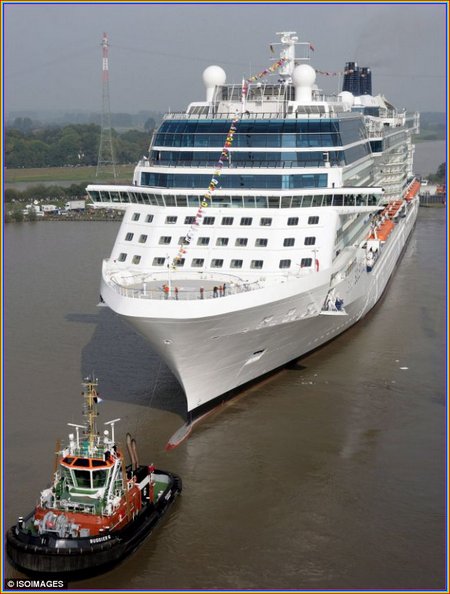
The world's biggest cruise ship.


People watch the cruiser ‘Celebrity Solstice’ dragged through the watergate of the Meyer Dockyard in Papenburg


She is one of five Solstice ships launching between now and 2012, and can carry nearly 3,000 passengers.And, after thousands of years, landlubbers might be able to escape their phobia of the sea… This cruiser is the first one to boast an authentic grass lawn on its top deck.


Giant: The ship dwarfs the dock as it is tugged out to sea.

Biggest Family in the World.

The man with 39 wives, 94 children and 33 grandchildren

• Ziona Chana lives with all of them in a 100-room mansion
• His wives take it in turns to share his bed
• It takes 30 whole chickens just to make dinner
• He is head of the world’s biggest family – and says he is ‘blessed’ to have his 39 wives.
• Ziona Chana also has 94 children, 14-daughters-in-law and 33 grandchildren.
• They live in a 100-room, four storey house set amidst the hills of Baktwang village in the Indian state of Mizoram, where the wives sleep in giant communal dormitories.


The Ziona family in its entirety with all 181 members


Top 10 Most Populated Countries in the world.


1. China

It has total estimated population of 1,330,141,295.

2. India
It has total estimated population of 1,173,108,018.

3. United States
It has total estimated population of 310,232,863.

4. Indonesia
It has total estimated population of 242,968,342

5. Brazil
Its total population is 201,103,330.

6.Pakistan
Their total estimated population is 177,276,594.

7.Bangladesh
Their estimated population in 2010 was 158,065,841

8.Nigeria
It has estimated population of 152,217,341

9.Russia
It has total estimated population of 139,390,205.

10.Japan
Japan’s total estimated population in 2010 was 126,804,433 and is still increasing gradually.

Wednesday, February 23, 2011

Average Engineer Salary – USA

As most of you are going to USA to pursue masters and earn a fortune as an engineer, ever wondered what an average engineer salary is? Though money is not everything, it is still good to know the average engineer salary for your course or branch as it forms one of the motivating factors to work hard and reach the level.

The average engineer salary varies from branch to branch and more importantly from state to state in the United states of America. Though engineering is not the top most professions, it is still one among the top and the “average engineer salary” is a pretty good figure. Since we cannot discuss engineering salary variation with state, let us analyze the salaries of engineers of the most common majors.

Average Electrical Engineering salary

Electrical engineering, a core engineering field can fetch you a job only if you have strong foundation. A bachelor degree in electrical engineering can fetch you a job that offers salaries in the range of 50000$ to 75000$ while a masters degree salary range is 60000 to 85000 US dollars. Great! Isn’t it?

Average Computer Engineering salary – Software Engineering

I need not say what a software engineer does. The average entry level salary for a sotware engineer, be it BS or MS in computer science engineering ranges from 60000 to 90000 US dollars. One more good thing is, the growth is exceptional compared to other engineering fields. Negative side would be too much competition. The number of software engineers in on a rise and hence the competition and also the job security is comparatively less in most of the companies

Average Mechanical Engineering salary

The average engineer salary for a mechanical engineer doesn’t actually fall in a big range. It is usually 60000 to 65000 dollars. However, the growth is very good and one can reach the mark of lakh dollars within 6 years.

Average Civil engineering salary

The civil engineers, who are basically into construction and other maintainance activities have starting salaries in the range of 45000 to 55000 dollars. However, the figure reaches 60000 in an year.

Average Structure engineering salary

Structure engineering is similar to civil engineering and the salaries also fall under the same line.

This is the average engineer salary in USA for fresh graduates. However, one has to consider the fact that the salary varies with state. The average engineer salary in big cities like New York is usually high compared to the smaller states.

Related Posts Plugin for WordPress, Blogger...